
There are no more items in your cart

zoom
pre
next

Referencia: KS0052
 Envio
Envio
Tus pedidos los enviamos en 24-48 horas por transporte urgente
 Contacto
Tus dudas o preguntas puedes enviarlas al correo shop@innovadidactic.com
 Formas de pago
Paga tus compras con tarjeta Visa, MasterCard, Paypal, etc
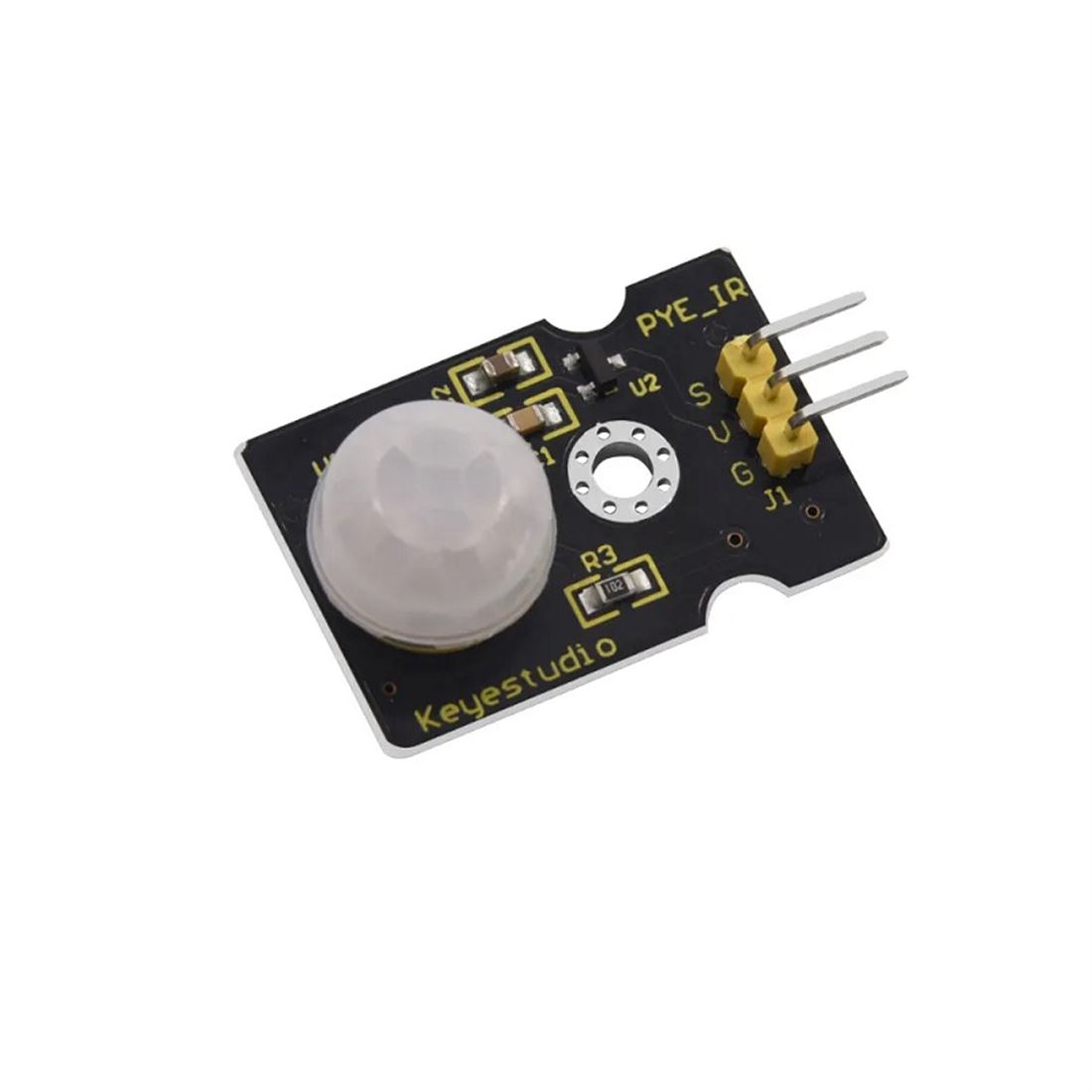
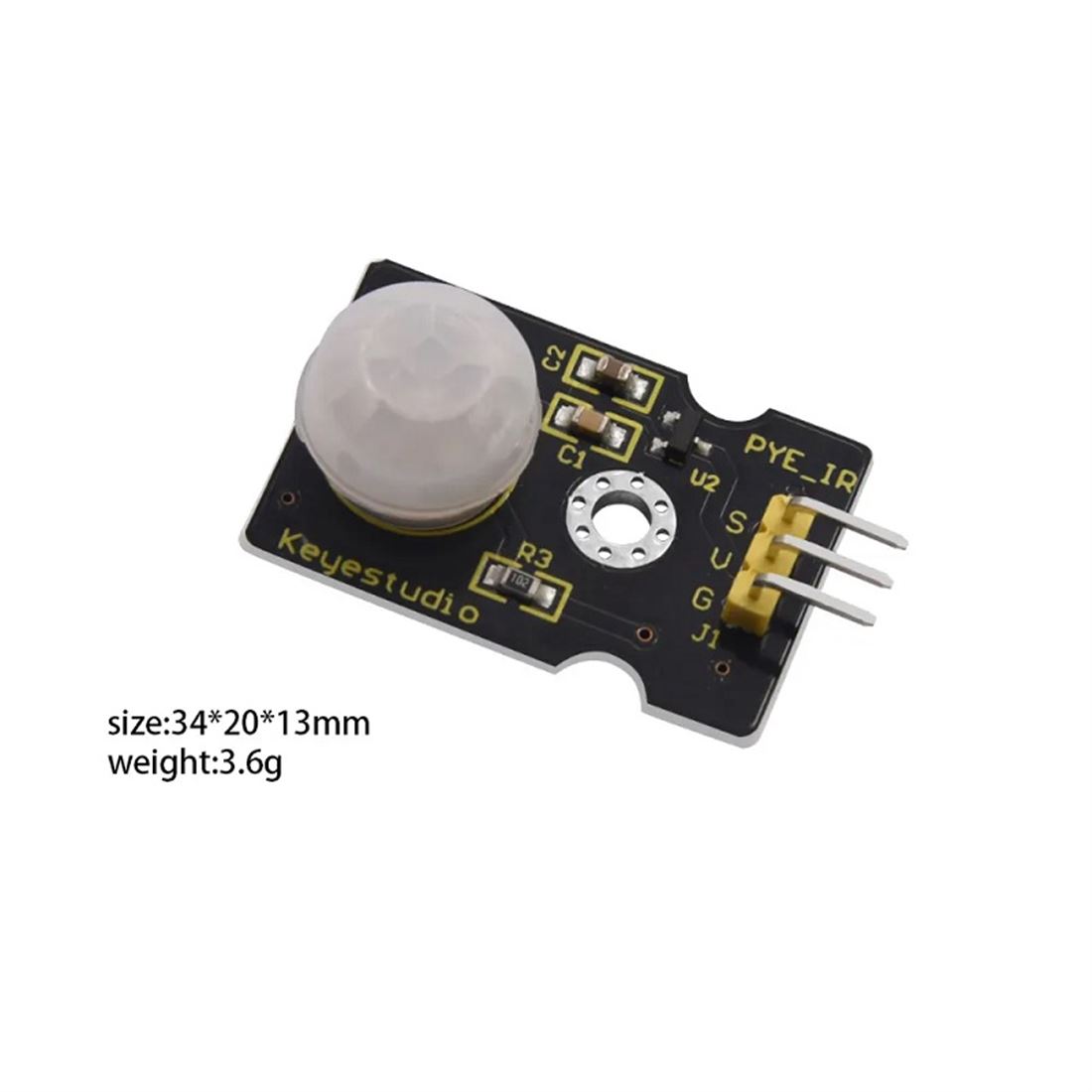
This digital PIR motion sensor detects infrared radiation emitted by moving people or animals and generates a digital switching signal (high/low). It is a practical solution for building alarm systems, automatic lighting, robots that react to their environment or any project that needs to know when someone passes through a given area. Thanks to its built-in lens and digital output, the sensor is easy to use even in educational environments with no advanced electronics background.
Unlike traditional pyroelectric sensors, which require a separate detector, dedicated chip and complex peripheral circuitry, this module integrates everything needed on a single board. The result is a small-sized sensor with lower power consumption and higher reliability, ideal for setups that must run for long periods. The on-board LED clearly shows when motion is detected (output goes high), making visual debugging straightforward during classroom activities.
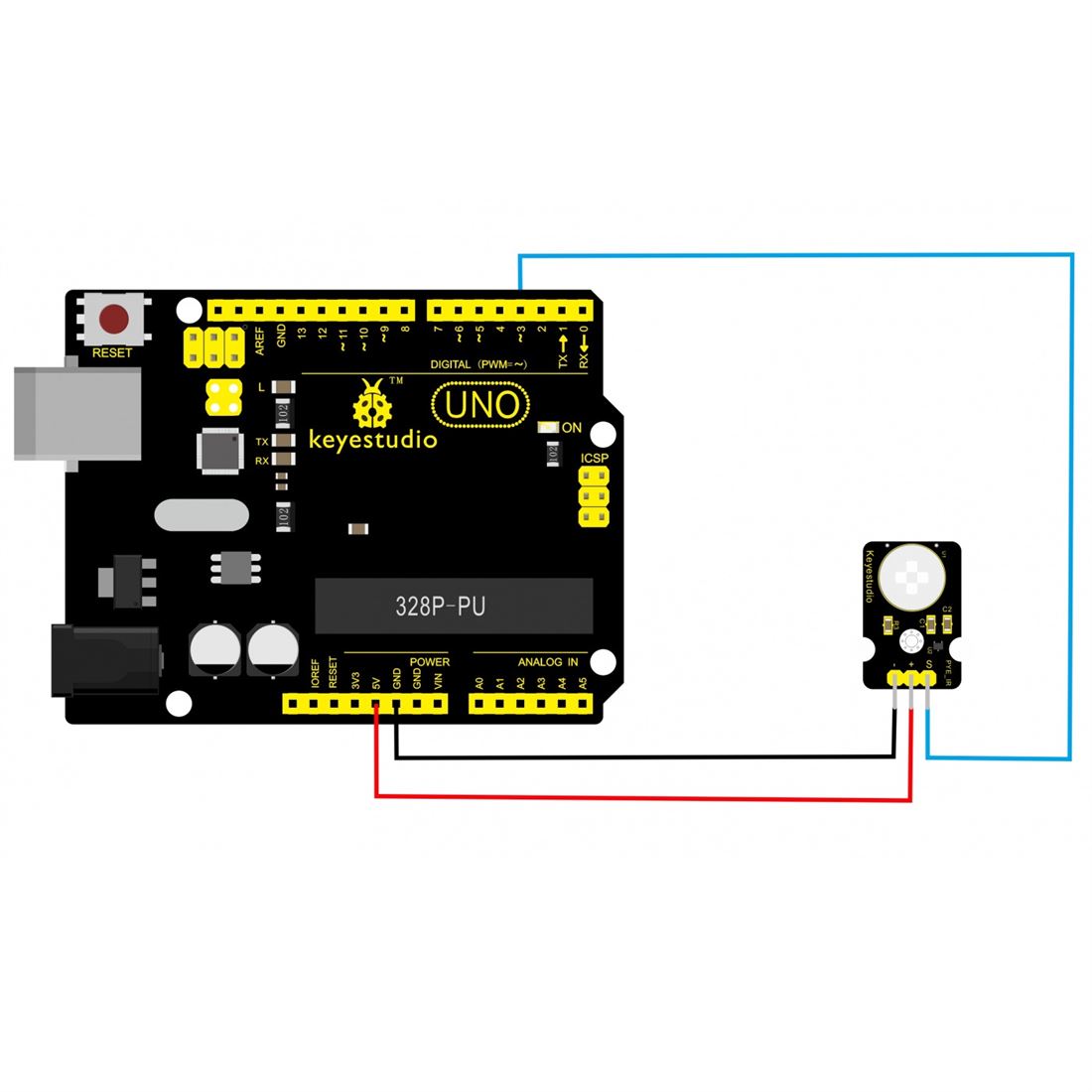
The module is powered from 3.3 V to 5 V (up to 18 V maximum on the input) and provides a digital output that can be connected directly to an input pin on most educational control boards. It is compatible with Arduino boards, but also with ESP32 STEAMakers, Keyestudio UNO, Micro:STEAMakers, micro:bit and ED1, as well as other boards operating in the 3.3–5 V range. Within these ecosystems, the sensor can be used in projects programmed with STEAMakersBlocks and MicroBlocks, allowing students to react to motion by turning LEDs on, triggering alarms, moving servos or logging events.
The sensor uses a white plastic lens to focus infrared radiation onto the rectangular sensing element. When the long side of this rectangle is oriented parallel to the ground, the detection distance is optimal. In typical tests, the effective detection range is around 3 to 4 meters, with a detection angle of about 100°, which is enough to cover doors, corridors or specific areas of a model. Sensitivity is highest around 25 ºC, and the detection distance becomes shorter when ambient temperature rises above about 30 ºC.
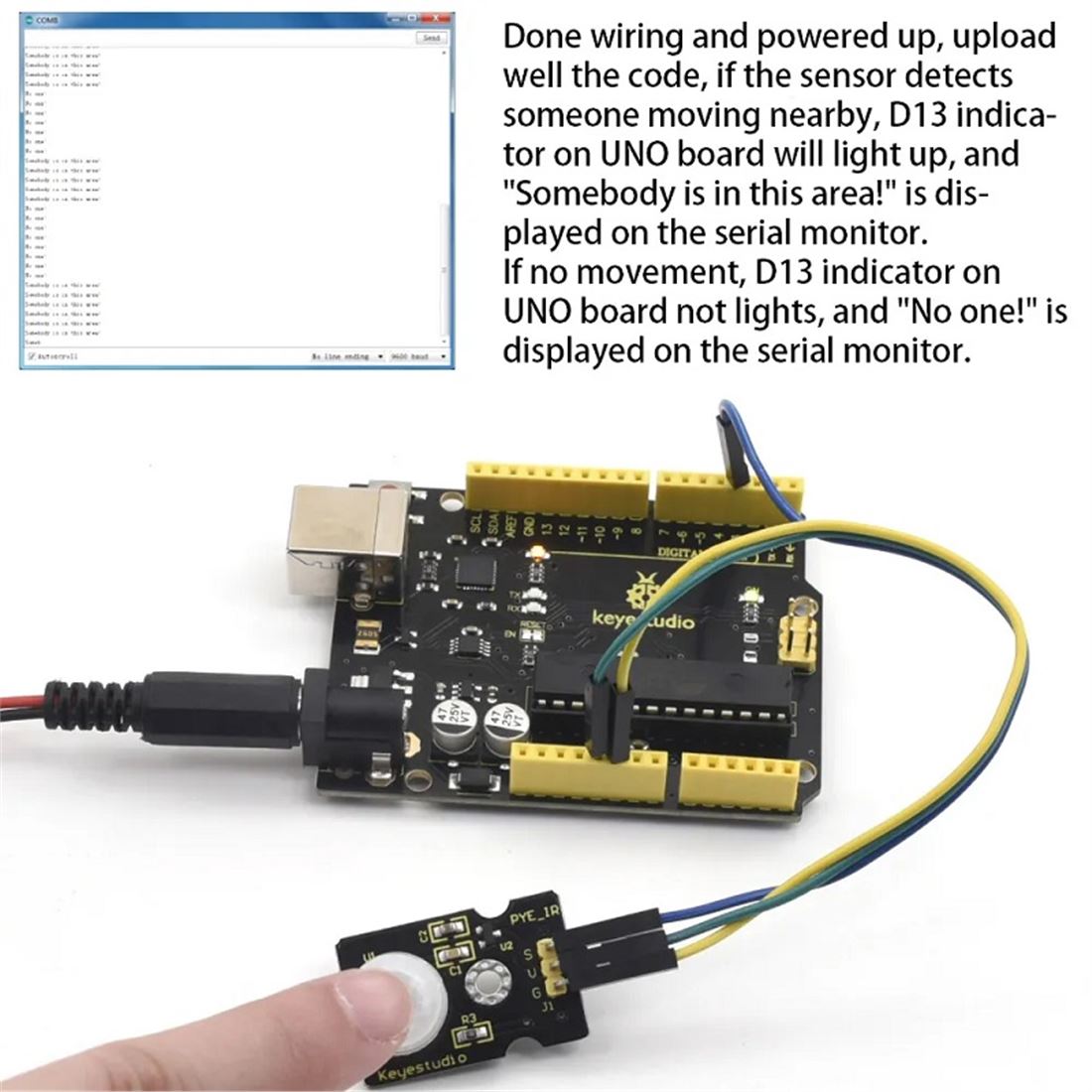
After powering the system and uploading the program to the control board, it is recommended to wait 5 to 10 seconds before starting tests so that the sensor can stabilize. It should always be used with the white lens fitted, since removing it significantly reduces range and detection reliability.
| Input Voltage | DC 3.3 V - 5 V |
| Working Current | 15 µA |
| Operating temperature | -20 ~ 85 ºC |
| Output voltage | high level 3 V, low level 0 V |
| High-level output delay | approximately 2.3 ~ 3 seconds |
| Detection angle | 100° |
| Detection distance | 3 ~ 4 meters (typical) |
| Output indicator | LED on when output is high |
| Maximum pin current | 100 mA |
| Module size | 30 × 20 mm |
| Weight | 4g |
Thanks to its simple wiring, low power consumption and direct digital response, this PIR sensor is an excellent choice for STEAM projects that introduce students to presence detection: simulated alarm systems, automatic doors, light control, robots that react to people or experiments that analyse movement. Its integration with compatible educational boards and block-based programming makes the learning experience visual, immediate and highly engaging.
A compact, reliable and easy-to-use digital PIR sensor to add motion detection to any educational or basic home automation project.
Thanks to its simple wiring, low power consumption and direct digital response, this PIR sensor is an excellent choice for STEAM projects that introduce students to presence detection: simulated alarm systems, automatic doors, light control, robots that react to people or experiments that analyse movement. Its integration with compatible educational boards and block-based programming makes the learning experience visual, immediate and highly engaging.
The sensor uses a white plastic lens to focus infrared radiation onto the rectangular sensing element. When the long side of this rectangle is oriented parallel to the ground, the detection distance is optimal. In typical tests, the effective detection range is around 3 to 4 meters, with a detection angle of about 100°, which is enough to cover doors, corridors or specific areas of a model. Sensitivity is highest around 25 ºC, and the detection distance becomes shorter when ambient temperature rises above about 30 ºC.
The sensor uses a white plastic lens to focus infrared radiation onto the rectangular sensing element. When the long side of this rectangle is oriented parallel to the ground, the detection distance is optimal. In typical tests, the effective detection range is around 3 to 4 meters, with a detection angle of about 100°, which is enough to cover doors, corridors or specific areas of a model. Sensitivity is highest around 25 ºC, and the detection distance becomes shorter when ambient temperature rises above about 30 ºC.
After powering the system and uploading the program to the control board, it is recommended to wait 5 to 10 seconds before starting tests so that the sensor can stabilize. It should always be used with the white lens fitted, since removing it significantly reduces range and detection reliability.

The sensor uses a white plastic lens to focus infrared radiation onto the rectangular sensing element. When the long side of this rectangle is oriented parallel to the ground, the detection distance is optimal. In typical tests, the effective detection range is around 3 to 4 meters, with a detection angle of about 100°, which is enough to cover doors, corridors or specific areas of a model. Sensitivity is highest around 25 ºC, and the detection distance becomes shorter when ambient temperature rises above about 30 ºC.
After powering the system and uploading the program to the control board, it is recommended to wait 5 to 10 seconds before starting tests so that the sensor can stabilize. It should always be used with the white lens fitted, since removing it significantly reduces range and detection reliability.